Nvidia is in talks to acquire Hugging Face, a popular AI platform, for over $13 billion. The deal could give Nvidia a bigger foothold with developers and drive more workloads onto its chips.
Open Executive is a virtual executive team AI system developed by sentelabs.ai, providing a single coherent executive voice with Harvard MBA-level knowledge. It uses eight specialist AI agents and maintains episodic memory of past decisions and initiatives across sessions.
MTurk is suitable for simple and repetitive tasks, freeing up internal staff to focus on higher-value activities. It offers a flexible platform to access thousands of on-demand workers, enabling businesses to efficiently manage labor and overhead costs.
Asahi Linux 7.2 has been released with various improvements, including better power management and video decoding acceleration using the Apple Video Decoder (AVD). The AVD supports H.264, H.265, and VP9 decoding on M3 machines and above.
The LAION-BVD dataset is a large-scale open video dataset for multimodal learning, containing 80M videos with a total duration of 10 million hours. It supports research in multimodal pre-training across video, audio, and image modalities.
Tailcat is a remixed version of Tailscale's open-source pieces, acting like netcat but over Tailscale's data plane without its control plane. It uses WireGuard for end-to-end encryption and magicsock for NAT traversal through DERP relays or direct UDP connections.
DuckLabs is joining Amazon Web Services (AWS) in early September, allowing the DuckDB project to reach a broader audience and pursue new ideas. The open-source components of the "Duck Stack" will remain free and open source under the MIT license.
Glacial lake outburst floods (GLOFs) pose significant risks in High Mountain Asia, particularly in transboundary Himalayan basins where new lakes are developing. A study assessed the threat from two current lakes (Galongco and Jialongco) and a potential future lake, finding that worst-case scenarios could lead to catastrophic events with peak discharges up to 15 times larger than previous ...
LWN subscribers can access an article about Bambu Lab violating the Affero General Public License version 3 (AGPLv3) by distributing a modified PrusaSlicer without releasing source code. The Software Freedom Conservancy (SFC) is working to provide alternatives and enforce compliance through various means, including lawsuits and community involvement.
NYC uses Zohran's videos to announce initiatives, ending with a human-readable URL nyc.gov/{initiative} for easy engagement. This approach funnels social media distribution into one place, owned by NYC, setting up a pattern of interaction with city government online.
Clerky, an online legal service for startups, was acquired by Stripe to help high-growth companies with routine paperwork. The acquisition will enable Clerky to build new products and features with more resources.
Qwen Studio offers comprehensive functionality spanning chatbot, image and video understanding, image generation, document processing, web search integration, tool utilization, and artifacts.
You can view public Twitter profiles and tweets without a login by entering a username, tweet, or URL. Twitter Viewer is a free online tool that allows anonymous browsing of public content with no tracking or personal info required.
Actinide, an advanced materials company, has successfully produced high-assay low-enriched uranium (HALEU) fuel for next-generation reactors. The company's technology bypasses the current bottleneck in domestic supply chains and can produce solid HALEU directly.
A volunteer-built app called CoMaps was used by first responders during the earthquake in Venezuela, providing them with detailed maps that could be accessed offline. The app's weekly updates allowed for rapid deployment of fresh map data to disaster zones, enabling rescuers to navigate effectively and respond more efficiently.
A user created a site to filter GitHub's incident history by services and severity levels, allowing users to compare reliability narratives. Since March 2016, GitHub has experienced 1125 incidents with a monthly rate of 24 (down from previous months).
IBM announces its first dual-architecture mainframe processor, designed to run on both IBM and Arm platforms. The new processor will enable enterprises to run various operating systems and applications simultaneously.
The site already has content, and serving a Markdown variant simplifies the reading experience for AI clients by removing unnecessary markup. This results in faster loading times and improved model performance.
Nebula Sans is a modern sans-serif typeface designed for legibility in digital and print applications, available under the SIL Open Font License. It's based on Source Sans and adapted to match Whitney SSm's metrics, featuring curly glyphs and tabular lining figures.
A new linker called mold is introduced to improve the linking process in software build, allowing for faster compilation of large C++ programs. Mold achieves significant speedups over existing linkers by applying data parallelism across the entire linking pipeline.
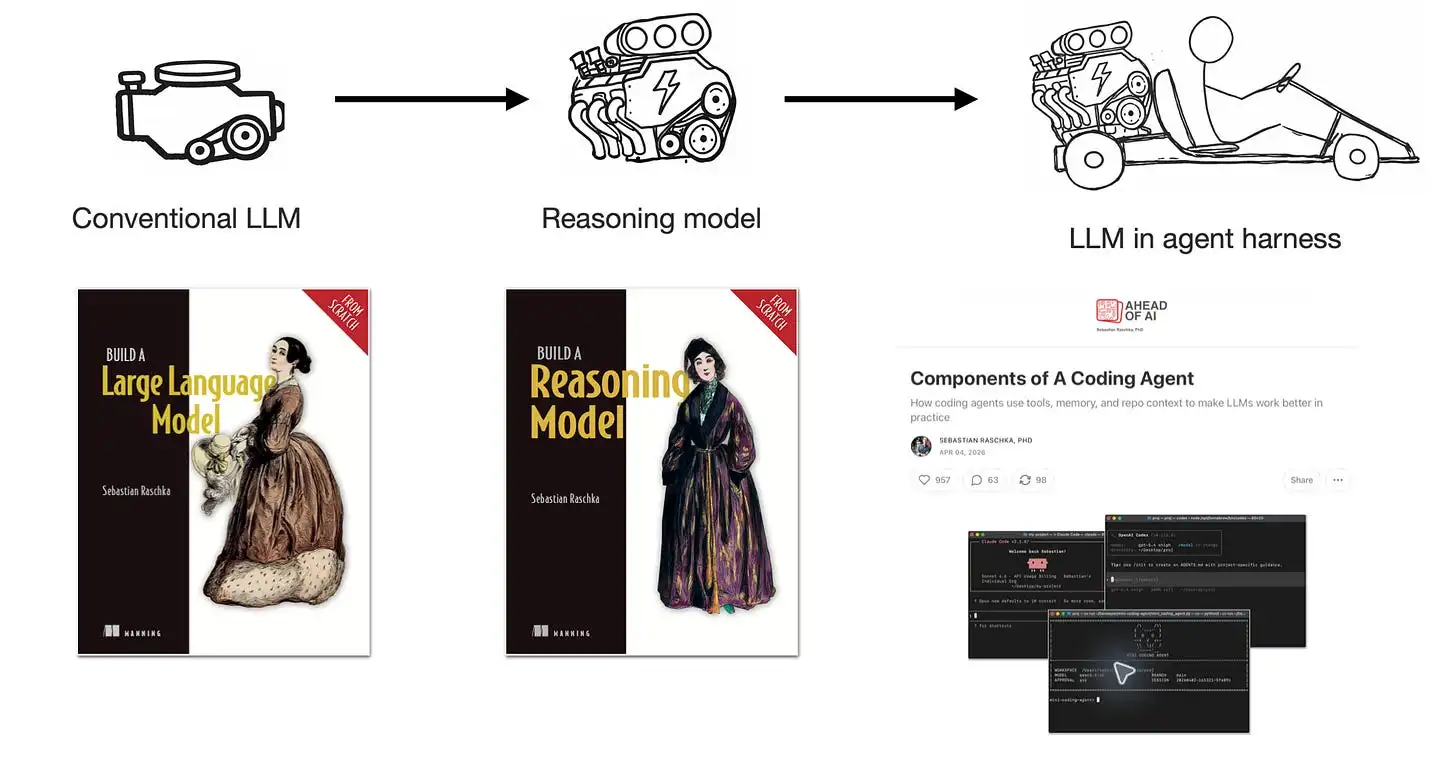
The author has developed an agentic harness using various tools like Pi, Claude, and Cursor to streamline their development workflow. They've learned to leverage the capabilities of large language models (LLMs) without relying on proprietary services.
A Farm Action report examines Taylor Farms' massive reach and influence in the US produce market, highlighting concerns over food safety, worker treatment, and government oversight. The company's power has led to a concentration of control among large buyers and sellers.
The authors of Linum v3 are working on a new open-weight generative video model, targeting three key improvements: better prompt adherence, training/inference acceleration, and consistent physics. They share their approach to data filtering using black box neural networks and reinforcement learning with verifiable rewards (RLVR) for fine-tuning LLMs.
Risklytics provides commercial insurance for companies using AI, covering risks not addressed by standard policies. They review and customize applications before submitting to carriers that want this risk on their books.