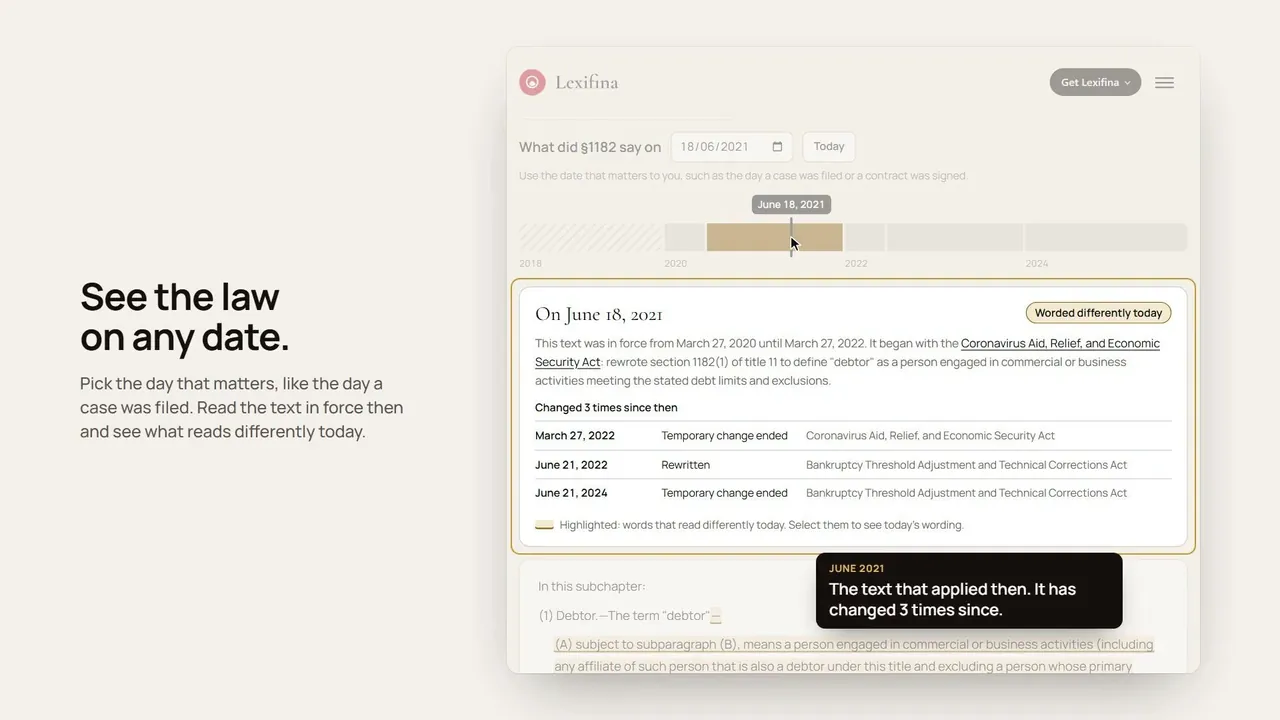
A programmer can track code changes, while lawyers rely on notes at the foot of statutes for similar information. Researchers are working to improve language models' ability to utilize proper lineage and temporal validity in legal research.
Google has released Genie 4, a new world model that simulates real-world physics and human behavior in real-time. It enables interactive dialogue, audio-like music and ambient noises to be generated simultaneously with the world.
A 25-year-old German photographer won the Nikon Small World competition with a striking image of ink drops being deposited on paper. He captured the image using a microscope and traditional techniques, without relying on AI.
Anthropic's life sciences team is accelerating disease cure development through partnerships with six organizations and in-house research. They aim to integrate AI into all stages of drug discovery, from target identification to clinical trials.
Tailscale SSH has identified security vulnerabilities related to privilege escalation, which can be exploited by authorized users. A patched client release is expected by the end of October 27, with updated access policies and configuration recommendations provided.
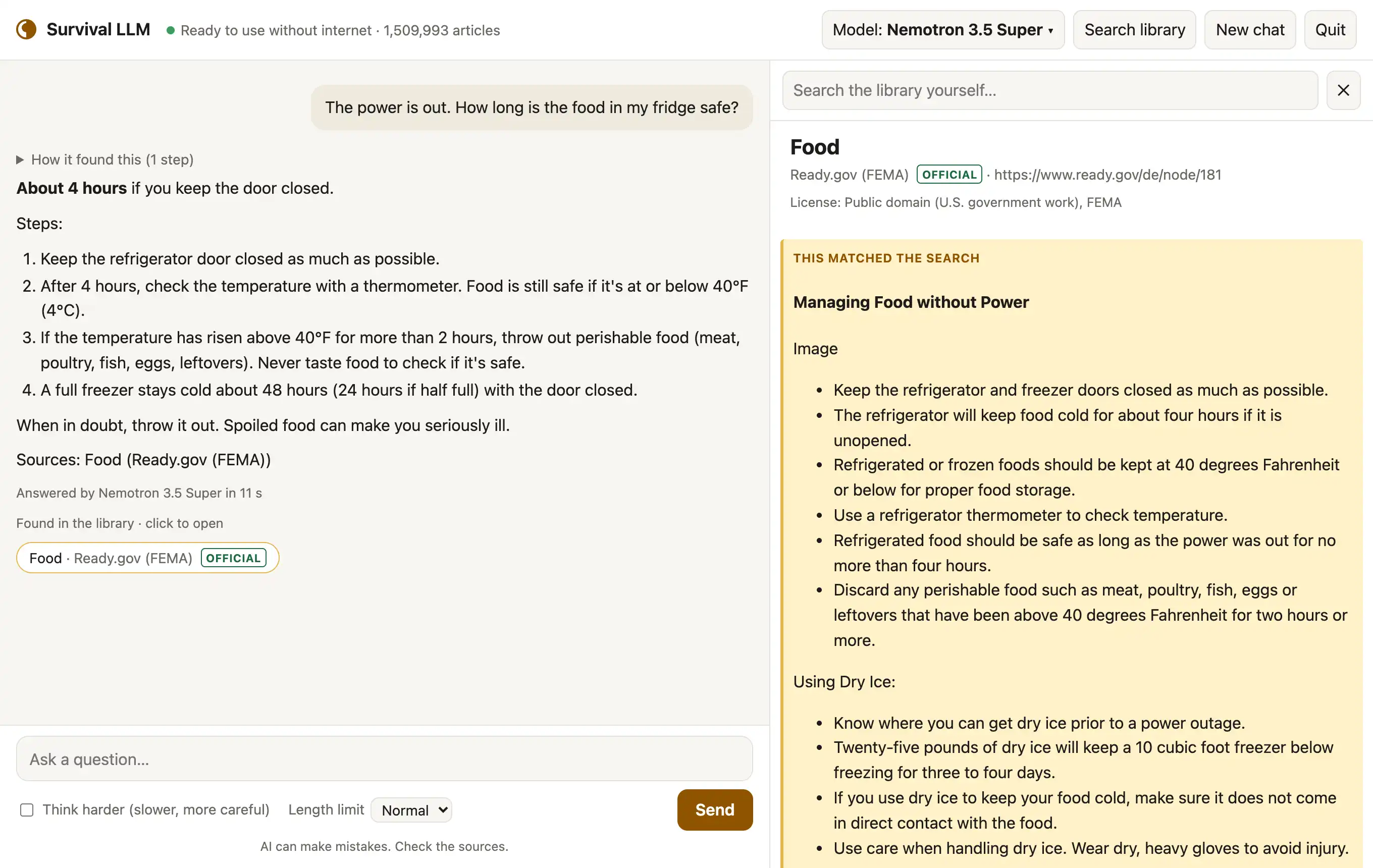
Survival LLM is a free AI assistant that provides trusted answers on various topics, including emergency situations and survival skills. It runs locally on your computer without requiring an internet connection after initial setup.
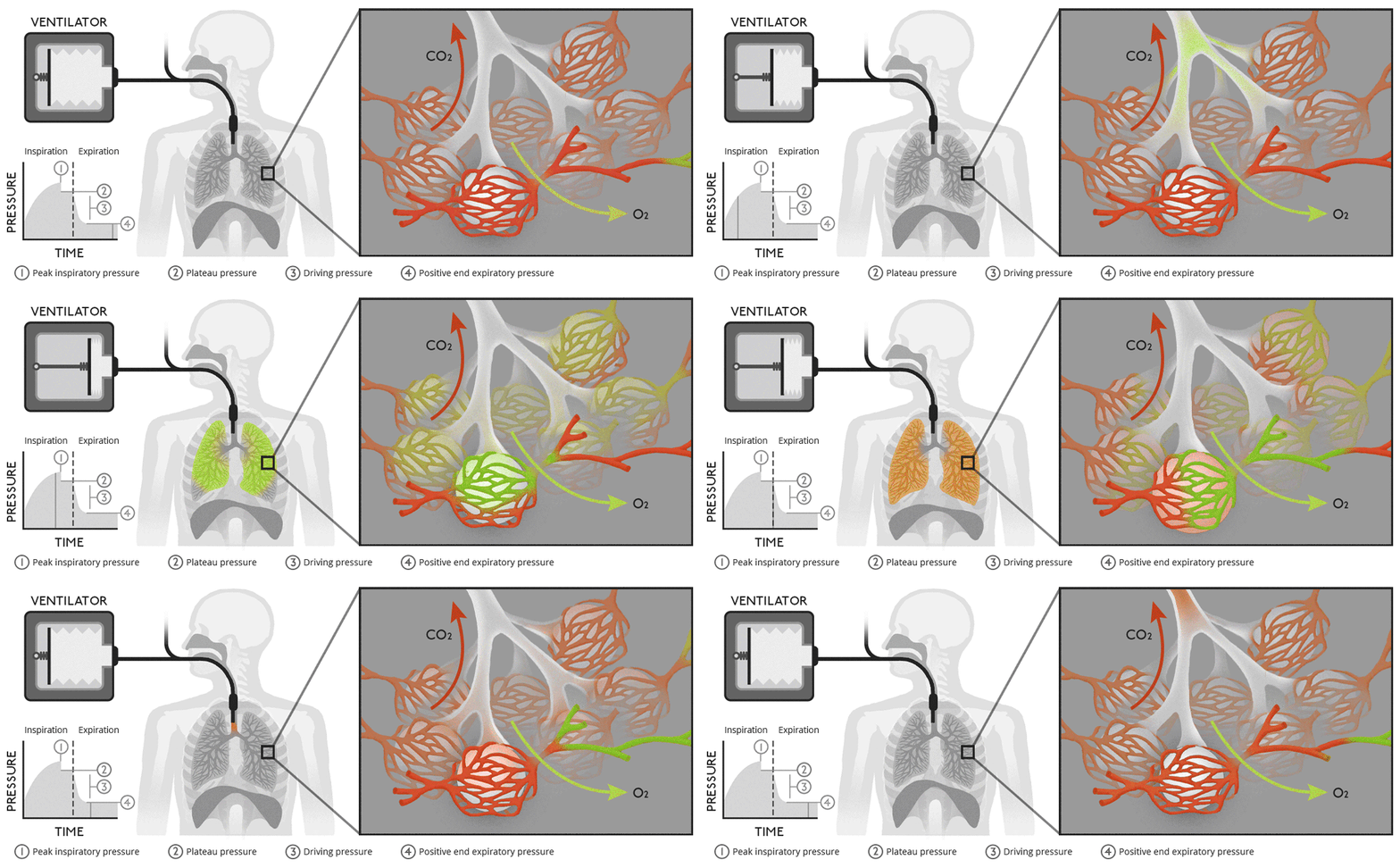
You collaborated with Dr. Sarah Low on animations about ventilators and shared simplified graphics to the public domain, while also working on a geologic map of the Moon using NASA data.
The author has developed a nighttime routine of writing x86 assembly language on their 14-year-old Asus eeePC laptop, which is running Alpine Linux and editing their NASM port of the Forth programming language.
Two new Raspberry Pi boards, the Zero 3 W and a Model A version of the Pi 4, have been spotted in the Linux kernel tree with improved specs. The devices are expected to be released soon, but no official announcement has been made yet.
Rob Manuel created 81 ZX81 jokes, illustrated himself using only the ZX81 character set. The book is a nostalgic look at computing and creativity in the 1980s for fans of the Sinclair ZX81.
Apple has announced the new 14-inch MacBook Pro with M6 chip, delivering improved performance and AI capabilities. The laptop features a powerful 12-core CPU, faster GPU, and advanced Neural Engine for enhanced graphics and AI workloads.
The Python JIT compiler, added in 2024 for CPython's 3.13 release, has been paused due to concerns about maintenance and compatibility. The project was withdrawn after the authors failed to meet the Python steering council's requirements for a standards-track PEP.
You can lease a new Mac with low monthly payments and upgrade at the end of your term. Apple's products prioritize user privacy, using on-device processing and private cloud computing to protect data.
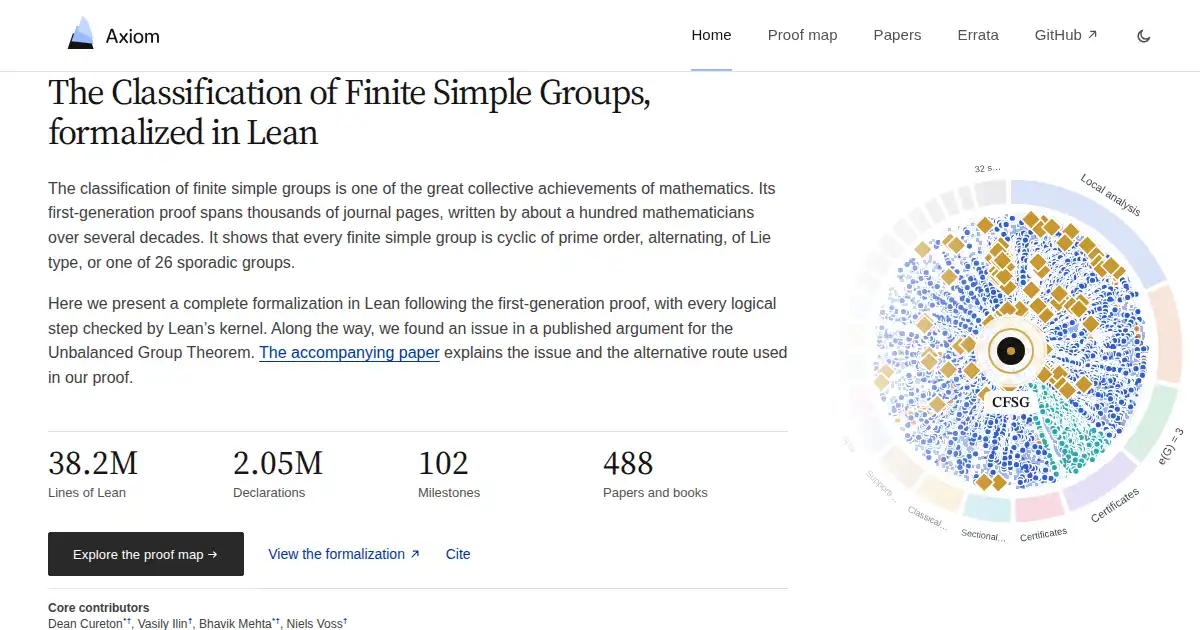
A new group theory result was found in a paper about formalizing the first-generation proof, which contradicts a published route to the Unbalanced Group Theorem. An alternative argument for simple groups is given using Solomon's 1976 theory of maximal 2-components.
The author has been actively using and contributing to the Zig programming language for several months, sharing their experiences and thoughts on its features, including its build system, error handling, and documentation. They have worked on various projects such as snurl, a library for interacting with small networks like Gemini and Gopher.
Researchers in the US and Canada are tracking Monarch butterflies using Bluetooth-enabled radio-pulse tags, providing detailed data on their migration patterns. The technology allows for real-time monitoring of the butterflies' paths and speed, helping scientists understand how they navigate around challenging areas.
The SS United States, a 302m passenger liner, will be sunk in the Gulf of Mexico as an artificial reef in November. The ship's sinking is expected to create new habitat for marine life and attract divers and fishermen to the region.
The company Hex has released a new version, Hex 4.0, after starting from scratch due to issues with its previous architecture and the rise of agent-based data work. The company has raised $100 million in funding to continue building this new platform.
Two Democratic senators are demanding the Trump administration release a secret court's findings on its surveillance program, which they claim is being withheld until Congress reauthorizes it. The ruling was due to be released within 180 days but has not been made public despite the deadline passing in September.
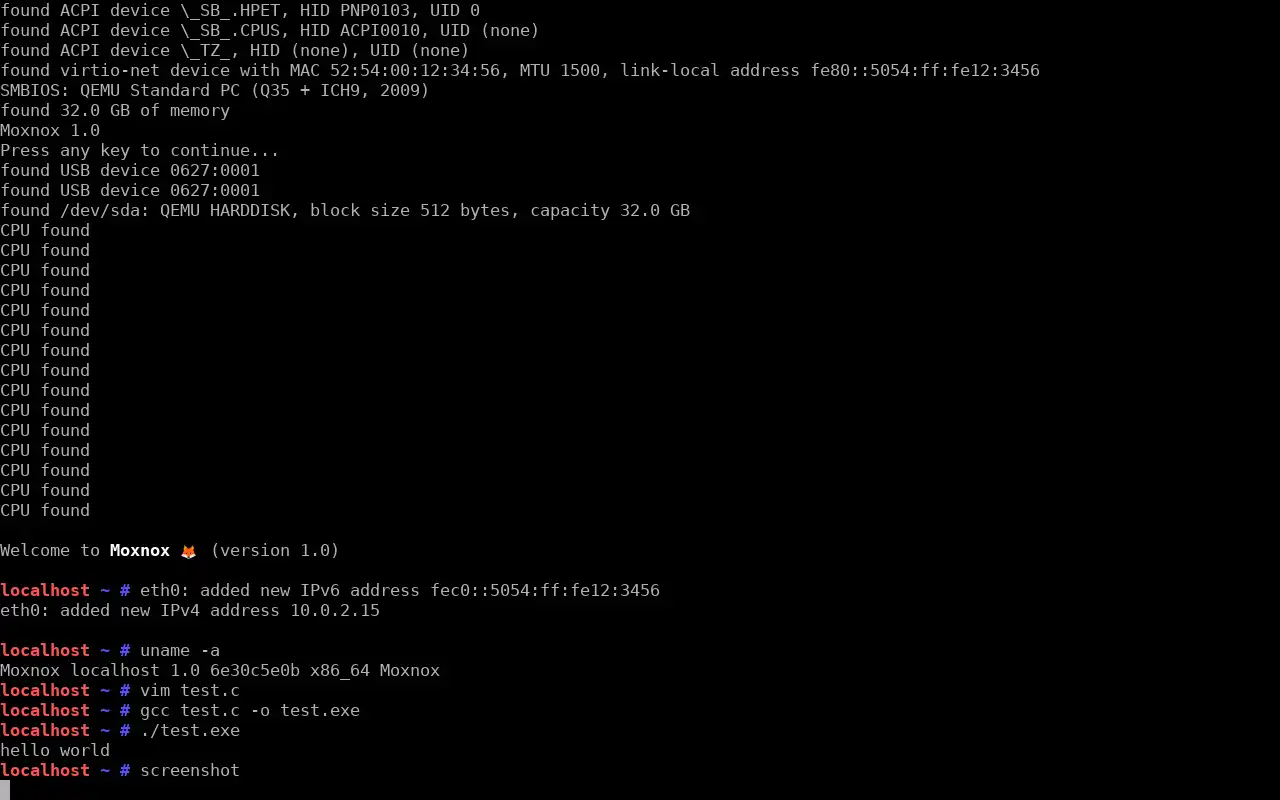
Moxnox is a hobby OS that runs on btrfs and is compatible with POSIX systems, modeled after Windows NT. It has implemented 642 of the ~1,200 functions in POSIX 2024.
Homeowners in Catawba County face rising HOA fees from $1,250 to $2,500 a month due to increased costs. Many fear foreclosure or bankruptcy as they struggle with the significant increase.
The new LFM3 model family offers a multimodal approach with text, vision, audio, and decision models on one shared backbone. The first release covers 2B parameter range models that can be fine-tuned locally and run efficiently on any device.
The US government has partnered with Claude Enterprise to offer a 40% discount on its products and services, including coding and cybersecurity tools. This agreement aims to help government agencies solve complex problems without significant upfront costs, estimated to save the government $1 billion.
Micron is abandoning its 4F² DRAM technology, instead focusing on scaling existing 6F² designs and developing new architectures like 3D DRAM. The company believes that the challenges of capacitor scaling in 3D DRAM make it a more viable long-term strategy than pursuing smaller geometries.
A critical UEFI firmware vulnerability, CVE-2026-97631, has been discovered in the TianoCore EDK II codebase used by major server vendors and data centers. The vulnerability allows attackers to execute malicious code before Secure Boot and other defenses load.
Ethiopia's land leasing system, which aims to capture land value for public benefit, has faced challenges in its implementation. The country's constitution and laws have evolved over time to address these issues, but weaknesses persist.